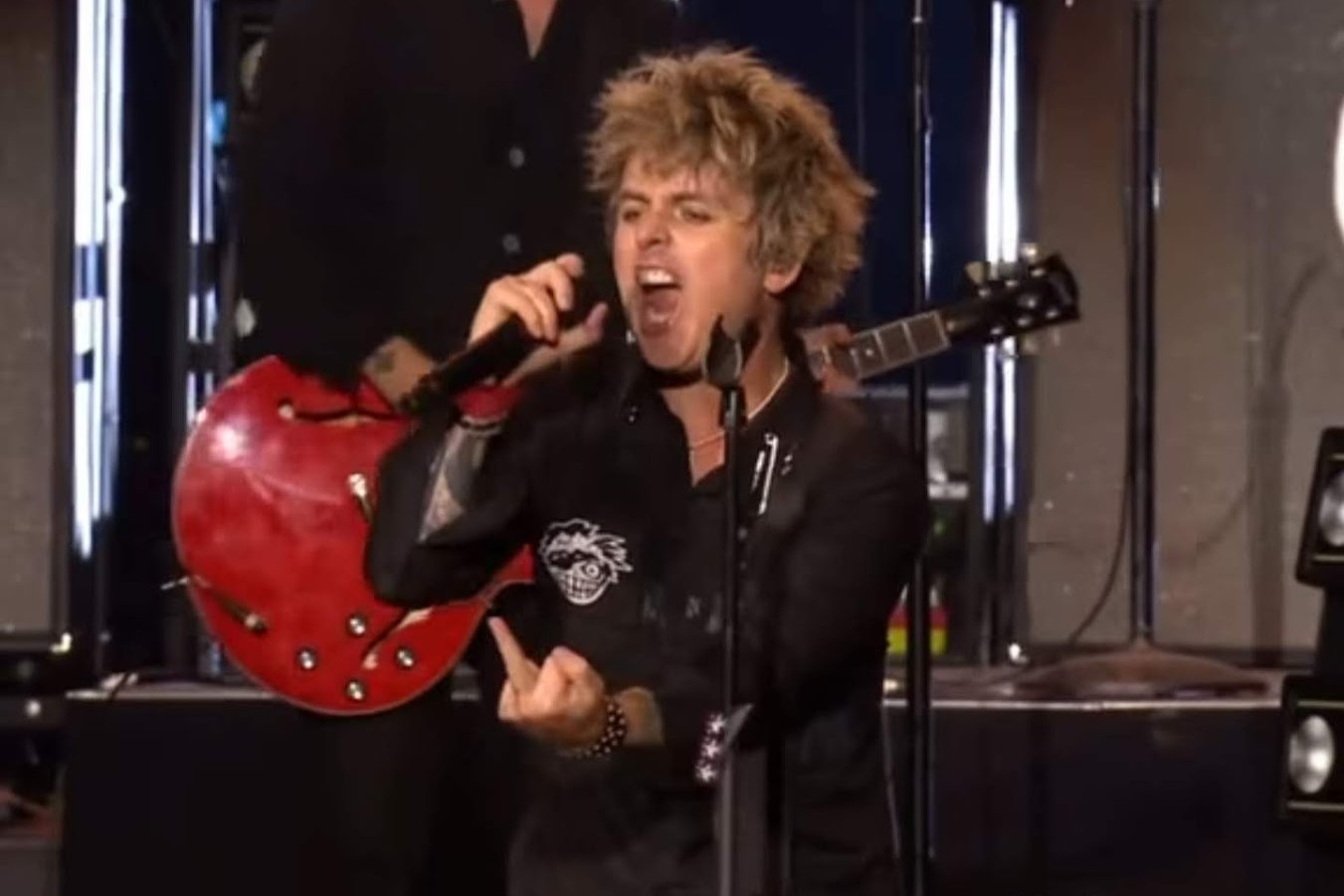
When Green Day played the 2024 New Year’s Eve performance on Dick Clark’s New Year’s Rockin’ Eve, changing the lyrics to “American Idiot” to “I’m not a part of the MAGA agenda,” something felt… off.
Not because of the political statement itself. Green Day has been vocally liberal since at least 2004’s American Idiot. The dissonance came from somewhere else: watching a band worth hundreds of millions of dollars, playing a corporate television special, singing about not being part of “the establishment” while literally being the establishment.
And yet, when you point this out online, the responses are predictable:
“They haven’t compromised their music!” “Just because they’re successful doesn’t mean they sold out!” “The Sex Pistols were on a major label too!”
All technically true. But also… completely missing the point.
The “sellout” debate around Green Day isn’t simple, and it’s not just about success. It’s about something more complicated: the gap between what a band claims to be and what they actually are. And Green Day might be the perfect case study for understanding what “selling out” actually means in the 21st century.
Ok? Now keep calm, read on, and stop being part of a “redneck agenda”!
Part 1: What Does “Selling Out” Even Mean?
Before we can determine if Green Day sold out, we need to agree on what that term actually means. Spoiler alert: we won’t agree, because there are at least four competing definitions, and which one you use determines your answer.
Definition 1: Artistic Compromise for Commercial Success
The classic definition:
- Changing your sound to chase radio play or trends
- Letting record labels dictate creative decisions
- Making formulaic music designed to sell rather than express
- Choosing marketability over authenticity
Examples:
- Band with experimental sound suddenly releases generic pop-rock album
- Label forcing “radio-friendly” singles
- Firing creative members for more “professional” musicians
- Auto-tuning a punk band
By this standard: Green Day arguably isn’t a sellout. They’ve maintained creative control, written the music they wanted to write, and evolved on their own terms (mostly).
Definition 2: Taking Corporate Money / Major Label = Sellout
The punk purist definition:
- Any major label deal is selling out
- DIY or nothing
- Steve Albini’s position: the music industry is exploitation; participating = complicity
- Corporate sponsorships, advertising deals, mainstream platforms
By this standard: Green Day sold out in 1994 when they signed to Reprise Records (Warner Music Group) and released Dookie.
But here’s the problem: So did the Ramones (Sire/Warner), the Clash (CBS/Epic), and even the Sex Pistols (Virgin Records). If this is your standard, basically every band you’ve heard of is a sellout…except your friend’s band. They’re on Bandcamp (but they still want money).
Definition 3: Becoming Part of the Establishment
The cultural position definition:
- Playing corporate events (Super Bowl, awards shows, New Year’s Eve specials)
- Rubbing elbows with politicians and mainstream institutions
- Becoming the thing you once opposed
- Broadway shows, movie deals, legacy act status
- Ticket prices that exclude working-class fans
By this standard: Green Day is absolutely a sellout. They:
- Played the Super Bowl
- Created a Broadway musical (American Idiot, 2010)
- Regularly appear at major political events
- Charge premium prices for arena/stadium shows
- Are explicitly aligned with the Democratic Party establishment
- Have been inducted into the Rock & Roll Hall of Fame
- Are banned from their original venue (924 Gilman Street) for selling out
Definition 4: Abandoning Your Original Community/Values
The authenticity definition:
- Leaving behind the scene that built you
- No longer accessible to original fans
- Forgetting where you came from
- Hypocrisy: claiming rebellion while being institutionalized
By this standard: It’s complicated. Green Day:
- Can’t play Gilman Street (banned since 1994)
- Tours with other arena rock bands (Weezer, Fall Out Boy)
- Are no longer part of the East Bay punk scene
- BUT: Still claim punk credibility and rebel status
Part 2: The Nirvana Angle
Here’s where things get interesting. Let’s talk about Kurt Cobain.
Nirvana is considered authentic. The purest distillation of 90s alternative rock. Not sellouts (despite massive commercial success) because Kurt Cobain was “conflicted” about fame and “struggled” with success.
But let’s look at what Nirvana actually did:
- Signed to DGC/Geffen Records (major label, part of Universal Music Group)
- Made music videos that dominated MTV
- Appeared on Saturday Night Live
- Did corporate magazine covers and interviews
- Became the biggest band in the world
- Made millions of dollars
- Kurt Cobain famously said of their success: “Let’s do the big rock ‘n’ roll swindle, take our 1 mil and run”
Sound familiar?
That quote—”take our 1 mil and run”—reveals something important. Kurt knew exactly what he was doing. He took the money. He played the game. The “swindle” framing was a way to maintain credibility while cashing checks.
So why isn’t Nirvana considered a sellout?
Three reasons:
1. Kurt appeared conflicted about success He wore homemade shirts saying “Corporate magazines still suck” while appearing in corporate magazines. He publicly struggled with fame. The aesthetic of resistance mattered more than the reality.
2. He died young Grimly, Kurt’s death in 1994 “preserved” his authenticity. He never got old enough to do a Super Bowl halftime show or a Broadway musical. He never had to become a legacy act playing state fairs.
3. He worked with Steve Albini For In Utero, Kurt hired Steve Albini—the gold standard of anti-sellout credibility. Albini refused royalties, only took flat fees, and openly criticized the music industry. Working with him was authenticity by association.
But here’s the kicker: Albini himself has said that calling bands “sellouts” is pointless. His position was consistent: the music industry is predatory, but bands have to make a living. Just don’t pretend you’re not participating in the system.
The lesson from Nirvana: Perception of authenticity matters more than actual behavior. Kurt seemed conflicted about success, so Nirvana gets a pass. Green Day seems comfortable with success, so they don’t.
Part 3: The Sex Pistols Were a Boy Band
Let’s get even more uncomfortable.
The Sex Pistols—arguably the most iconic “punk” band ever—were literally manufactured by a clothing store owner to sell fashion.
The facts:
- Malcolm McLaren assembled the band specifically to promote his boutique, SEX
- Sid Vicious couldn’t play bass (they unplugged him during shows)
- They were signed to Virgin Records (major corporate label)
- Released only ONE album before breaking up
- The entire project was marketing from day one
As one Redditor put it:
“Sex Pistols are the band that sold out the most for me, and since the beginning. For fuck’s sake they were random guys put together in a band to make publicity for a clothing brand and their bassist was so bad they unplugged his bass in concerts.”
And yet: The Sex Pistols are considered the purest expression of punk rock.
Why? Because they looked the part. Because the aesthetic was right. Because they imploded before the facade could crack.
The Sex Pistols prove that “selling out” has almost nothing to do with actual corporate involvement and everything to do with maintaining the appearance of rebellion.
Part 4: Green Day’s Actual Timeline
Let’s trace when Green Day allegedly “sold out” depending on which definition you’re using:
1994: Dookie and the Major Label Deal
What happened:
- Signed to Reprise Records (Warner Music Group)
- Dookie sold 20 million copies
- Banned from 924 Gilman Street for “selling out to corporate rock”
- Mainstream MTV and radio success
Who called them sellouts: The East Bay punk scene, DIY purists, Gilman Street regulars
The defense: They didn’t change their sound. They just played the same pop-punk they’d been playing on Kerplunk (their indie album). The label signed them for what they already were, not what they changed into.
Counterpoint: Signing to a major label IS the sellout by strict punk standards. The Gilman Street crowd wasn’t wrong by their own definition.
2004: American Idiot and the Image Change
What happened:
- Political concept album / rock opera
- Billie Joe dyed hair black, wore eyeliner
- Slick, produced sound (compared to earlier rawness)
- Explicitly political in mainstream-friendly way
- Massive commercial success
Who called them sellouts: Fans who wanted Dookie forever, purists who thought rock operas were pretentious
The defense: Bands are allowed to evolve. American Idiot was a creative risk that happened to pay off. They wrote the songs they wanted to write. The eyeliner aesthetic was popular at the time (emo/pop-punk explosion), but so what?
Counterpoint: The timing is suspicious. The image change aligned perfectly with 2004’s emo trend. The political messaging was vague enough to be marketable (“I don’t want to be an American idiot” = uncontroversial). And it became a massive commercial product—exactly what a sellout would do.
2010: American Idiot on Broadway
What happened:
- Literal Broadway musical
- Billie Joe Armstrong stars in performances
- Maximum commercialization of punk aesthetic
- Theater kids singing “punk rock” songs
- Tony Award nominations
Who called them sellouts: Almost everyone who wasn’t already convinced they’d sold out
The defense: Rock operas have precedent (Tommy, The Wall, Jesus Christ Superstar). It’s an artistic achievement. Broadway is a legitimate art form. Why is expanding into theater worse than playing stadiums?
Counterpoint: Come on. It’s Broadway. The most establishment, bougie, expensive, inaccessible art form in America. Tickets cost hundreds of dollars. This is the opposite of punk rock by every conceivable metric.
2015-Present: The Full Establishment Era
What happened:
- Package tours with Weezer and Fall Out Boy (nostalgia festival circuit)
- Super Bowl performances
- Dick Clark’s New Year’s Rockin’ Eve
- Explicit Democratic Party alignment
- Anti-Trump messaging (which is mainstream in entertainment)
- Rock & Roll Hall of Fame induction (2015)
- Legacy act status, greatest hits tours
- Billie Joe Armstrong net worth: $75 million
Who calls them sellouts: Anyone using the “establishment” definition
The defense: They’re using their platform for political activism. Bands are allowed to age. Success doesn’t equal selling out. They still make music they care about.
Counterpoint: You can’t be “anti-establishment” while playing the Super Bowl and collecting checks from Anheuser-Busch. Their “rebellion” is corporately sponsored. Their politics align perfectly with Hollywood, Silicon Valley, and the Democratic Party establishment—the most powerful institutions in American culture. That’s not rebellion. That’s being the establishment.
Part 5: The Political Problem
This is where Green Day’s “sellout” status gets really messy.
Being political isn’t selling out. The Clash were intensely political. Dead Kennedys were political. Rage Against the Machine is nothing BUT politics (although people trash them, calling them “Rage For The Machine”, etc.)
But there’s a difference between rebellion and branding.
What Rebellion Looks Like:
The Dixie Chicks (2003):
- Criticized George W. Bush during the Iraq War
- At the height of country music nationalism
- Lost their careers, received death threats
- Blacklisted from country radio
- Took a REAL risk
Rage Against the Machine:
- Critique capitalism while being on Sony (ironic, yes)
- BUT: Consistently criticize Democrats AND Republicans (although mostly Trump)
- Support actual radical causes (Zapatistas, Leonard Peltier, prison abolition)
- Politics that are genuinely unpopular in mainstream America
System of a Down:
- Armenian Genocide awareness (risky, niche)
- Anti-war during peak jingoism
- Genuinely strange and uncommercial sound
What Branding Looks Like:
Green Day’s anti-Trump stance:
- Shared by nearly every major corporation (Nike, Apple, Disney)
- Supported by Hollywood, media, tech industry
- The safest possible “rebellious” position in rock music
- Zero career risk—actually enhances their brand
- Aligns with their core fanbase demographics
Don’t get me wrong: Trump is legitimately worth criticizing. Green Day probably genuinely believes their politics, but how “deep” are their politics?
But it’s not rebellious. It’s the default position of the entire entertainment industry. Again, giving Trump the finger is like drinking a can of Pepsi and yelling at the Coke logo.
Real rebellion in 2025 would be:
- Criticizing Biden/Democratic Party from the left
- Taking unpopular foreign policy stances
- Critiquing woke capitalism
- Challenging their own fan base’s assumptions
- Supporting genuinely radical economic policies
Green Day does none of this. Their politics are perfectly calibrated to maximize brand appeal among their core demographic while maintaining corporate sponsorships.
That’s not selling out artistically. But it IS the establishment.
Part 6: The Rolling Stones Comparison
You know who isn’t called a sellout? The Rolling Stones.
The Rolling Stones:
- One of the highest-grossing touring acts of all time
- Corporate sponsorships everywhere
- Play private billionaire parties
- Ticket prices in the thousands
- Absolutely shameless about money
- Mick Jagger is worth $500 million
Why don’t we call them sellouts?
Because they don’t pretend otherwise.
The Stones haven’t claimed to be rebels since the 1970s. They’re openly a legacy act. A nostalgia machine. A corporation that happens to play rock music. They don’t lecture anyone about authenticity or fighting the power.
Green Day’s problem: They still want punk credibility while being a legacy arena rock act.
They want to be seen as rebels while playing the Super Bowl.
They want to critique “the establishment” while being the establishment.
That’s the actual sellout: the hypocrisy.
Part 7: What Are We Really Criticizing?
Here’s what I think is actually happening when people call Green Day sellouts:
It’s not about the music. American Idiot is a good album. Dookie is a great album. Even their newer stuff has solid songs.
It’s not really about success. We don’t begrudge artists making a living. Most punk fans would take a major label deal if offered. People don’t bash the Offspring as much as Green Day, and they…ah, save that one for later.
It’s about the gap between image and reality.
The image: “We’re rebels. We’re punk rock. We’re anti-establishment. We’re fighting the system.”
The reality: Multi-millionaires playing corporate events, aligned with one of America’s two ruling political parties, on Broadway, collecting Rock Hall honors.
If Green Day just said: “We’re a successful rock band. We make good music. We have political beliefs. We’ve been doing this for 30+ years and we’re proud of it.”
Nobody would call them sellouts. They’d be like the Foo Fighters—successful, mainstream, respected, and nobody questions their authenticity because they don’t claim to be something they’re not.
But when you play the Super Bowl and still act like you’re sticking it to the man… that’s when people roll their eyes.
Part 8: The Fan Defense Problem
One Reddit comment defending Green Day said:
“Who the hell are you to tell me what I am and what’s my master plan?”
This is a lyric from “Reject,” and it’s deployed as a defense: Green Day gets to do whatever they want.
True. They do.
But fans defending their favorite bands will twist themselves into pretzels to avoid admitting uncomfortable truths:
“They haven’t compromised their music!” Okay, but they’ve compromised their cultural position.
“The Sex Pistols were on a major label too!” Yes, and they were also manufactured sellouts. Two things can be true.
“All bands take corporate money!” No, they don’t. Steve Albini didn’t. Fugazi didn’t. Plenty of bands stay independent. It’s harder, but possible.
“Success doesn’t equal selling out!” Correct. But pretending you’re still rebels while being the establishment does.
The pattern: Fans will always find a way to defend their bands because admitting your favorite band sold out feels like admitting you were fooled. It’s easier to redefine “sellout” than accept the reality.
Part 9: So… Did They Sell Out?
The honest answer: It depends on your definition, and Green Day has sold out by some of them but not others.
By “Artistic Compromise” Standard:
No. Green Day has maintained creative control, written their own songs, and evolved on their own terms. They didn’t let labels dictate their sound (as far as we know). American Idiot was a risk that paid off, not a calculated sellout move.
By “Major Label = Sellout” Standard:
Yes. They signed to Reprise/Warner in 1994. If you’re a DIY purist, that’s the moment. Everything after is just details.
By “Becoming the Establishment” Standard:
Absolutely yes. Broadway, Super Bowl, corporate events, political party alignment, Rock Hall, banned from Gilman Street. They are the establishment by every metric.
By “Abandoning Your Values” Standard:
Mostly yes. They claim punk/rebel status while being institutionally mainstream. The hypocrisy is the sellout.
Part 10: Why This Matters
You might be thinking: “Who cares? It’s just a rock band.”
But the Green Day sellout debate reveals something important about how we think about art, commerce, and authenticity:
1. We want our rebels pre-packaged and safe.
We want bands that look rebellious but don’t actually threaten anything. Green Day opposing Trump is perfect: it’s rebellious-flavored content that doesn’t challenge corporate power, wealth inequality, or the systems that made Green Day rich.
2. We confuse aesthetic with authenticity.
The Sex Pistols looked punk, so they were punk—even though they were manufactured. Green Day looks establishment now, so they’re sellouts—even though they’re making the same music. We judge the costume, not the content.
3. Success is inherently suspicious.
There’s a deep strain in rock culture that says if too many people like something, it must be compromised. This is silly—but it reveals our discomfort with capitalism. We know the system is rigged, so anyone who succeeds must have cheated somehow.
4. The term “sellout” is often weaponized nostalgia.
“They were better when I discovered them” becomes “they sold out when they got big.” It’s not about the band changing—it’s about us changing and needing to blame them for it.
Conclusion: The Uncomfortable Truth
Just because Green Day is successful doesn’t make them sellouts.
They worked hard. They wrote good songs. They earned their success.
Then again…
When you play the Super Bowl while singing about not being part of the establishment, when you do Broadway musicals about punk rock rebellion, when you’re multi-millionaires lecturing people about fighting the system while aligning with one of America’s two ruling parties…
You might not have sold out artistically.
But you’ve absolutely sold out culturally.
And maybe that’s fine. Maybe we should stop expecting 50-year-old millionaires to be rebels. Maybe the real problem is that they won’t just own it.
The Rolling Stones know what they are. Green Day still wants to pretend.
Final thought:
Selling out isn’t success. It’s not making money. It’s not even going mainstream.
Selling out is pretending you’re still the outsider when you’re the establishment. It’s claiming rebellion while cashing establishment checks. It’s the hypocrisy, not the money.
Green Day hasn’t sold out their music.
But they’ve sold out their credibility.
And maybe, after 30+ years, that’s just called getting old.
No responses yet