Your girlfriend reads her horoscope. You roll your eyes. “That’s not real,” you say. “You can’t predict personality from the position of planets.”
Then you pay $150 for someone on the internet to tell you that your jawline means you’re a natural-born leader and your forehead shape indicates entrepreneurial tendencies.
Congratulations. You’ve discovered physiognomy—astrology for men who think they’re too rational for astrology.
Welcome to the world of face reading, where ancient Greek medical theories meet modern self-help, AI validation claims mix with thousand-year-old pseudoscience, and guys who would never touch a zodiac chart are suddenly very interested in what their nose shape says about their temperament.
So what the hell is physiognomy? Is there anything real to it? And why are grown men paying hundreds of dollars to be told their bone structure determines their destiny?
Let’s figure this out.
What Is Physiognomy?
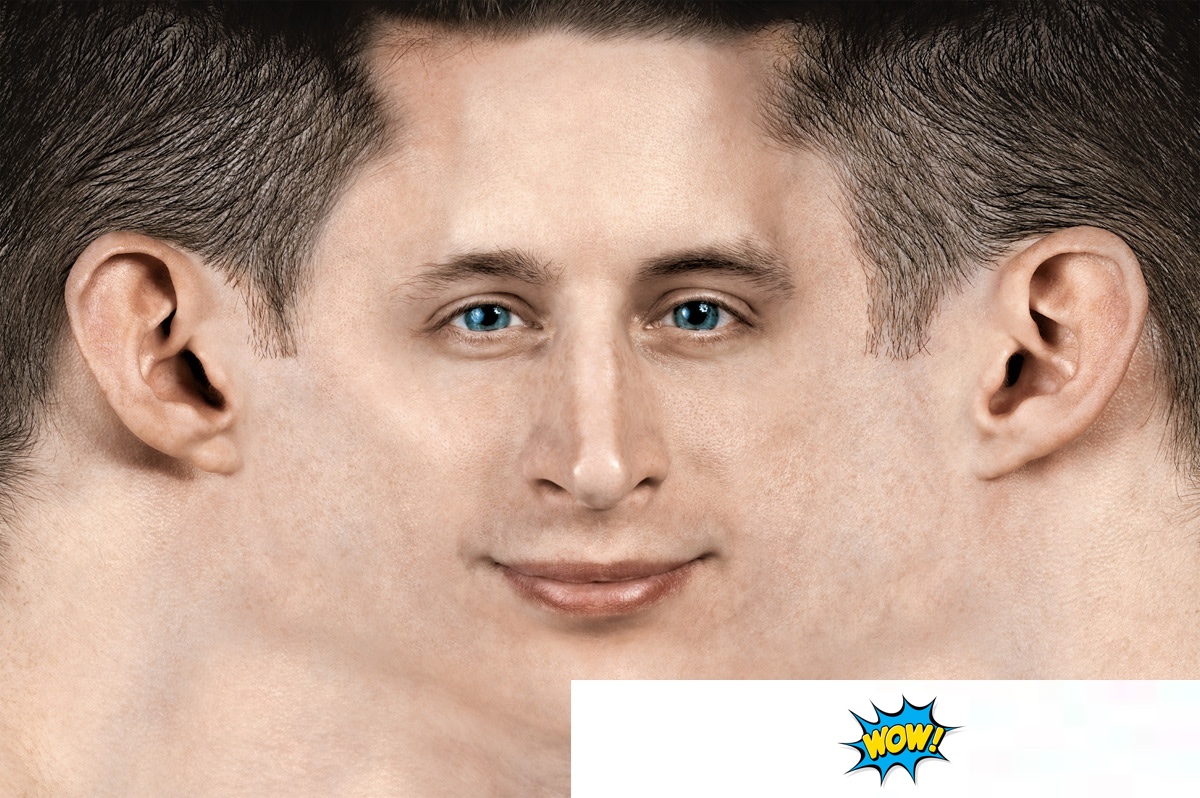
Physiognomy is the practice of reading someone’s personality, character, and mental traits from their physical appearance—especially their face.
The word comes from Greek: “physio” (nature/body) and “gnomy” (knowledge). Literally: “knowledge from appearance.”
The basic claim: Your face reveals who you are.
Not your expressions. Not how you style your hair or whether you smile. Your actual bone structure—the shape of your jaw, the width of your forehead, the size of your nose, the distance between your eyes.
According to physiognomy practitioners, these fixed physical features correspond to fixed personality traits.
For example:
- High forehead = intelligence
- Strong jawline = willpower and leadership
- Wide-set eyes = openness and creativity
- Thin lips = reserved and cold
- Prominent nose = strong character
And so on.
The practice is ancient. Greeks did it. Chinese did it. Indians did it. Medieval Arabs did it. Victorian Europeans were obsessed with it.
For most of human history, physiognomy was considered legitimate. Aristotle wrote about it. Renaissance scholars studied it. 19th-century scientists tried to systematize it.
Then, around 1900, it fell out of favor—mostly because it got tied up with racism, eugenics, and Nazi pseudoscience about “degenerate” facial types.
But now? It’s back.
The Physiognomy Guys: A Modern Revival
Walk around certain corners of the internet and you’ll find a growing community of physiognomy practitioners offering their services:
- Face reading analyses: Send them your photo, pay $100-200, get a detailed personality report based on your facial features
- YouTube channels: Celebrity face readings (analyzing politicians, actors, criminals)
- Patreon academies: Monthly subscriptions ($10-50/month) to learn how to read faces yourself
- Business consulting: Hire them to analyze your business partners, employees, or romantic interests
- Coaching services: Personal consultations on how to optimize your life based on your facial temperament
The pitch is always similar:
“Physiognomy is ancient wisdom, practiced across cultures for thousands of years. Modern science is now validating what the ancients knew—that faces reveal personality. Don’t judge a book by its cover? Wrong. ALWAYS judge a book by its cover.”
They cite:
- Ancient Greek texts (Aristotle’s Physiognomics)
- Traditional Chinese face reading (Mien Shiang)
- Indian Vedic practices
- Medieval Islamic scholars
- Recent AI studies claiming neural networks can predict personality from faces
The framework they use most often? The Four Temperaments.
The Four Temperaments: Ancient Medicine as Personality Test
The core system most physiognomy practitioners use is the Four Temperaments, an ancient Greek medical theory based on the idea that personality is determined by bodily fluids (“humors”).
Here’s the breakdown:
1. Choleric (Yellow Bile)
Facial features:
- High, straight forehead
- Strong, angular jawline
- Chin jutting forward
- Sharp, intense features
Personality:
- Goal-oriented, dominant, willful
- Natural leader, strategic thinker
- Quick to anger, impatient
- Ideal careers: CEO, military officer, entrepreneur, engineer
2. Sanguine (Blood)
Facial features:
- Round, full face
- Smiling, expressive features
- Prominent cheeks
- Warm, open appearance
Personality:
- Sociable, optimistic, energetic
- People person, loves attention
- Can be impulsive, distracted
- Ideal careers: Sales, marketing, entertainment, hospitality
3. Phlegmatic (Phlegm)
Facial features:
- Soft, rounded features
- Calm, peaceful expression
- Less angular face
- Gentle appearance
Personality:
- Calm, patient, easygoing
- Good listener, supportive
- Can be passive, unmotivated
- Ideal careers: Counseling, teaching, administration, support roles
4. Melancholic (Black Bile)
Facial features:
- Long, narrow face
- Serious expression
- Deep-set eyes
- Thoughtful, contemplative look
Personality:
- Analytical, detail-oriented, perfectionist
- Creative but moody
- Prone to overthinking, depression
- Ideal careers: Artist, scientist, writer, researcher
Sound familiar?
It should. Because it’s exactly the same structure as astrology, Myers-Briggs, and every other personality typology system.
Four neat categories. Everyone fits into one (or a mix). Each has strengths and weaknesses. Each is suited to different life paths.
The only difference? Instead of “What’s your zodiac sign?” it’s “What’s your facial structure?”
Wait—Is There Actually Something To This?
Here’s where it gets complicated.
Because unlike astrology (which is pure nonsense—planetary positions at birth have zero causal mechanism for affecting personality), physiognomy has a kernel of truth buried in it.
Faces DO carry information.
Real Examples Where Faces Tell You Something:
1. Down Syndrome
- Flattened face, upward-slanting eyes, small ears
- These features are caused by trisomy 21 (genetic condition)
- The same genetic condition causes cognitive impairment
- So yes: the facial features ARE correlated with mental traits
- This is not prejudice. It’s medical reality.
2. Fetal Alcohol Syndrome
- Smooth philtrum (area above upper lip), thin upper lip, small eyes
- Brain damage from prenatal alcohol exposure
- Facial features caused by the same developmental disruption that causes cognitive issues
- Face = real predictor of traits
3. Testosterone and Aggression
- High testosterone affects facial structure (wider face, stronger jaw, prominent brow)
- High testosterone ALSO affects behavior (aggression, dominance-seeking, risk-taking)
- So “tough guy face” might correlate with “tough guy behavior”
- Not because the face causes it, but because the same hormone affects both
4. Health Markers
- Skin condition, eye clarity, facial symmetry reveal health
- Poor health affects behavior, energy, mood
- You CAN spot drug users, sleep-deprived people, mentally ill individuals from their faces
- Real pattern recognition
5. Grooming and Self-Presentation
- How someone presents their face (hair, makeup, grooming, expression) DOES correlate with personality
- Extroverts smile more, dress more boldly
- Conscientious people groom better
- But this is behavior, not bone structure
Your Gut Instinct About “Troubled Individuals”
When you look at someone and think “something’s off,” you’re probably right.
Your brain is integrating:
- Facial features (health, symmetry, expression)
- Body language (posture, movement, eye contact)
- Grooming (hygiene, clothing, presentation)
- Context (where they are, what they’re doing)
- Micro-expressions (fleeting emotions)
This isn’t pseudoscience. This is pattern recognition that kept humans alive for millennia.
If someone looks “dangerous,” they probably are—because faces, behavior, and personality ARE connected in real ways.
But here’s the key question:
Can you systematize this into a reliable personality assessment tool?
That’s where physiognomy falls apart.
The Science: What’s Real vs. What’s Bullshit
Let’s be honest about what research actually shows.
What Studies Have Found:
Facial Width-to-Height Ratio (fWHR):
- Wider faces (relative to height) correlate with higher testosterone
- Some studies link wider faces to aggression, dominance, unethical behavior
- BUT: Effect sizes are tiny (explains maybe 1-5% of variance)
- Results don’t replicate consistently
- Confounded by ethnicity, age, body weight
Attractiveness and Health:
- Facial symmetry correlates with genetic fitness (well-established)
- Clear skin, bright eyes indicate health
- Averageness (faces close to population average) rated as attractive
- This is real—but it’s about health, not personality
First Impressions:
- People form consistent personality judgments from faces in milliseconds
- These judgments predict some real outcomes (voting, hiring, dating)
- BUT: This shows WE judge faces, not that our judgments are accurate
- Mostly we’re detecting confidence, health, attractiveness—not deep personality
AI and Face Reading:
- Recent studies claim neural networks can predict personality traits from faces
- Some claim to detect sexual orientation, political beliefs, criminality
- Problems:
- AI picks up grooming, expression, lighting, camera angle, makeup—not bone structure
- Training data is biased (learns cultural stereotypes)
- Replication crisis (many studies don’t hold up)
- Confounding variables everywhere
What Has NO Scientific Support:
The Four Temperaments:
- Based on ancient “humors” theory (blood, phlegm, bile)
- Zero biological basis
- Modern personality psychology uses Big Five traits, not temperaments
- It’s astrology-tier pseudoscience dressed up with Greek names
Specific Feature-to-Trait Mappings:
- “High forehead = intelligence”
- “Strong jaw = leadership”
- “Thin lips = cold personality”
- No evidence for any of these specific claims
Bone Structure Determines Personality:
- The core claim of physiognomy
- No mechanism, no evidence, no replication
- Personality is shaped by genetics, environment, experience—not facial shape
- Even when correlations exist, they’re tiny and unreliable
Physiognomy vs. Astrology: The Same Product, Different Packaging
Let’s be real about what’s happening here.
| Astrology | Physiognomy |
|---|---|
| Stars at birth determine personality | Bone structure determines personality |
| 12 zodiac signs | 4 temperaments (or specific features) |
| Read your horoscope for life guidance | Get face analyzed for life guidance |
| “Mercury in retrograde made me do it” | “My Choleric temperament made me do it” |
| Women are the primary market | Men are the primary market |
| Costs $0-100 for reading | Costs $100-200+ for analysis |
| “It’s ancient wisdom from Babylon!” | “It’s ancient wisdom from Greece!” |
| Vague statements feel accurate (Barnum effect) | Vague statements feel accurate (Barnum effect) |
| Some tiny kernel of truth (seasons affect fetal development) | Some tiny kernel of truth (faces carry health/hormone info) |
| Mostly confirmation bias | Mostly confirmation bias |
| Gives you identity + removes responsibility | Gives you identity + removes responsibility |
The appeal is identical:
- Simple categories – Everyone fits somewhere
- Explains yourself – “This is why I’m like this”
- Validates your self-image – “Yes, you ARE a natural leader”
- Removes responsibility – “I can’t help it, it’s my temperament/sign”
- Ancient wisdom aesthetic – “This has been known for thousands of years”
- Community – Find others with your type
- Guidance – What career, partner, life path suits you
The only real difference:
Astrology is marketed to women and openly mystical.
Physiognomy is marketed to men and claims to be “scientific.”
But functionally? They’re the same product.
Men who mock astrology are paying for face readings because it FEELS more rational.
It’s not.
Why Men Fall For This (And It’s Not Stupidity)
Here’s the thing: people NEED personality frameworks.
We want to understand ourselves. We want categories. We want explanations for why we are the way we are and predictions for what we should do.
Women have always had this:
- Astrology (mainstream, socially acceptable)
- Tarot (mystical, fun)
- Enneagram (spiritual personality types)
Men rejected all of this as “woo-woo nonsense.”
But then they went looking for their own frameworks:
- Myers-Briggs (INTJ, ENTP, etc.) – Corporate-approved, feels scientific, also pseudoscience
- Enneagram (Type 8, Type 3, etc.) – Marketed as “spiritual growth,” same structure as astrology
- Sigma/Alpha/Beta male – Hierarchy based on… vibes? Also nonsense
- Now: Physiognomy – Ancient, has Greek terminology, involves measurement, feels “rational”
The appeal of physiognomy for men:
- Physical basis – It’s about bones and faces, not stars or vibes
- Measurable – You can take photos, measure ratios, analyze features
- Ancient wisdom – Greeks, Romans, Chinese all practiced it
- “Science” claims – AI studies, research papers, biological mechanisms
- Masculine framing – About dominance, leadership, strength (not feelings)
- Removes emotion – “I’m not emotional, I’m just Choleric”
But here’s the kicker:
All personality typology systems work the same way. They give you:
- Identity (“I’m a Choleric/INTJ/Leo”)
- Community (others like you)
- Explanation (why you struggle, why you succeed)
- Permission (to be who you are)
- Direction (what to do with your life)
Whether it’s your zodiac sign, your Myers-Briggs type, or your facial temperament—it’s all the same psychological need being met.
The difference is just branding.
Physiognomy is astrology for men who want to feel logical while doing the exact same thing.
The Dangerous Part: When Face Reading Gets Ugly
Here’s where we need to pump the brakes.
Because physiognomy isn’t just harmless fun like reading your horoscope.
Historically, physiognomy has been used to:
1. Justify Racism
Craniology and Phrenology (1800s):
- Measured skull shapes to “prove” racial hierarchies
- Claimed African skull shapes indicated lower intelligence
- Used to justify slavery and colonialism
- Completely debunked—but the damage was done
2. Identify “Criminal Types”
Cesare Lombroso (1870s):
- Italian criminologist claimed criminals had distinct facial features
- “Criminal types” included: sloping foreheads, large jaws, asymmetrical faces
- Used to justify harsher treatment of people who “looked criminal”
- Total pseudoscience—but influenced legal systems for decades
3. Nazi Eugenics
The Nazis used physiognomy extensively:
- “Aryan” features vs. “degenerate” features
- Used to identify Jews, Roma, disabled people
- Justified extermination based on facial measurements
- The darkest application of face reading in history
4. Modern Discrimination
Today, physiognomy is creeping back into:
Hiring decisions:
- “He has a weak chin, probably not leadership material”
- “She has a Phlegmatic face, won’t be aggressive enough for sales”
- This is illegal discrimination dressed up as personality assessment
AI screening:
- Some companies use AI to analyze video interviews
- Claims to detect “personality” from faces
- Actually just encoding racial and cultural biases into algorithms
Profiling:
- Police, security, border control using facial analysis
- “Suspicious faces” flagged by AI
- Disproportionately targets minorities
The problem:
Facial features correlate with ethnicity, not personality.
When you say “strong jaw = leadership,” you’re also saying “ethnic groups with different jaw structures = not leaders.”
When you say “wide-set eyes = trustworthy,” you’re encoding which ethnic features you consider trustworthy.
This is how prejudice gets laundered through “science.”
So What’s Real and What’s Bullshit?
Let me break this down clearly:
REAL:
✓ We judge faces – Evolutionary psychology, happens instantly, affects real decisions
✓ Some correlations exist – Health, hormones, genetics affect faces AND behavior (tiny effects)
✓ Pattern recognition works – Your gut instinct about “troubled individuals” is often right
✓ Certain conditions are visible – Down syndrome, FAS, drug use, health problems show in faces
✓ First impressions matter – Faces affect hiring, dating, voting (whether accurate or not)
✓ Context clues are powerful – Face + grooming + behavior + context = decent personality prediction
BULLSHIT:
✗ The Four Temperaments system – Ancient medical theory with zero biological basis
✗ Specific features = specific personality – “High forehead = smart” has no evidence
✗ Bone structure determines personality – No mechanism, no replication, effect sizes tiny if they exist at all
✗ You can “read” entire personalities from faces – Way too much noise, confirmation bias, cultural stereotypes
✗ Reliable enough for hiring/business – Discriminatory, illegal, not evidence-based
✗ AI proves face reading works – AI mostly picks up grooming/expression/context, not bone structure
✗ It’s “ancient wisdom validated by science” – Ancient practices were often wrong, modern studies are weak
The Verdict:
Physiognomy is approximately 20% real psychological phenomena + 80% pseudoscience.
What’s real:
- Faces carry SOME information (health, hormones, grooming, expression)
- We evolved to make quick judgments
- Pattern recognition works for survival
What’s fake:
- Systematic personality assessment from bone structure
- Ancient temperament frameworks
- Specific feature-to-trait mappings
- Using it for hiring or life decisions
It’s astrology with a more “scientific” aesthetic.
The Real Lesson: We All Want To Understand Ourselves
Here’s the uncomfortable truth:
Nobody actually cares if it’s scientifically valid.
People use Myers-Briggs at work (pseudoscience).
People read their horoscopes (definitely pseudoscience).
People take BuzzFeed “Which Disney Princess Are You?” quizzes (not even trying to be science).
Why?
Because personality frameworks serve a psychological need:
- Identity – Who am I?
- Explanation – Why am I like this?
- Permission – It’s okay to be this way
- Direction – What should I do?
- Community – Others like me exist
Physiognomy provides all of this.
And for men who rejected astrology as “illogical,” it provides something extra: the illusion of rationality.
You’re not reading horoscopes based on arbitrary star positions.
You’re analyzing biological features using ancient cross-cultural wisdom now validated by AI research.
Feels different. Functions identically.
So Should You Get Your Face Read?
Look, if you want to spend $150 to have someone tell you your jawline means you’re destined for leadership, go ahead.
It’s your money.
You’ll probably find it insightful (Barnum effect—vague statements feel personally accurate).
You’ll probably feel validated (they’ll tell you what you want to hear).
You’ll probably learn something about yourself (because ANY personality framework forces self-reflection).
Just know what you’re buying:
You’re not buying science. You’re buying a personality framework with ancient Greek branding and a masculine aesthetic.
You’re buying the same product your girlfriend gets from astrology, just repackaged for men who want to feel logical.
And that’s fine.
We all need stories about ourselves. We all want frameworks. We all want to understand why we are the way we are.
Just don’t pretend it’s more rational than reading horoscopes.
Because it’s not.
The Bottom Line
Physiognomy is real in the sense that faces carry information and we evolved to read them.
Physiognomy is bullshit in the sense that you can’t reliably predict someone’s entire personality, optimal career, and life path from their bone structure.
It’s useful for:
- Survival instinct (trusting your gut about people)
- Medical diagnosis (visible conditions)
- Understanding first impressions (how others see you)
It’s NOT useful for:
- Hiring decisions
- Personality assessment
- Life coaching
- Relationship advice
- Anything requiring accuracy over vibes
And most importantly:
If you mock your girlfriend for reading her horoscope, then pay $150 for someone to tell you your forehead shape determines your destiny…
You’re doing the exact same thing she is.
You just have better branding.
So next time you see a “physiognomy analysis” service pop up in your feed, ask yourself:
“Would I mock someone for paying an astrologer to read their birth chart?”
If yes, maybe skip the face reading.
If no, go wild. Get your temperament analyzed. Learn about your Choleric jawline. Join the Patreon academy.
Just know what you’re doing.
You’re not being rational.
You’re being human.
And there’s nothing wrong with that.
Just maybe don’t be a hypocrite about it.
P.S. – Your girlfriend’s horoscope was probably free. You paid $150. Who’s the real sucker here?
No responses yet